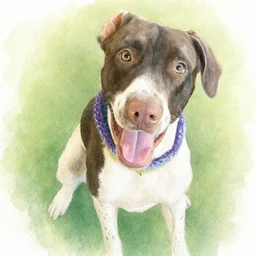

Labrador Retriever
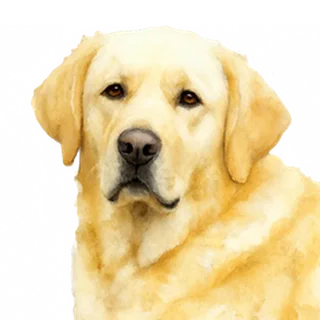
A Labrador Retriever is a friendly, outgoing retriever bred to work beside people. It's kind, intelligent and eager to please, with a keen love of water and food. It also needs a lot of exercise; the Royal Kennel Club suggests more than two hours a day, and an under-exercised Lab tends to find its own entertainment.
| Origin | Newfoundland, Canada; refined in Britain |
|---|---|
| Size | Large; 55–57 cm at the shoulder |
| Life expectancy | 11–13 years |
| Exercise | More than two hours a day |
| Temperament | Kindly, biddable, keen to please |
What is a Labrador Retriever like?
Friendly, steady and very keen to please. The Dogs Australia breed standard asks for an intelligent dog “with a strong will to please”, a kindly nature and “no trace of aggression or undue shyness”.
Despite the name, the breed comes from Newfoundland. The Royal Kennel Club tells how dogs there helped fishermen retrieve nets and lost lines, and a smaller local type was known as the St John’s dog. English sportsmen took some home in the 1800s, the Earl of Malmesbury gave the breed its name, and British breeders refined it. The Kennel Club recognised the Labrador in 1903, according to the AKC.
That temperament is why Labs turn up everywhere: as family dogs, gundogs, guide dogs and assistance dogs.
How much exercise does a Labrador need?
A lot. The Royal Kennel Club suggests more than two hours a day, and the AKC calls the Lab “an exuberant, very energetic breed that needs lots of exercise every day”.
Skimp on it and you’ll know. The AKC says a Lab that doesn’t get enough exercise is likely to turn hyperactive or destructive to burn off the energy. Don’t mistake the easygoing personality for low energy, either; the AKC is clear that this is an enthusiastic athlete.
The breed’s favourite activities, per the AKC, are retrieving and swimming, which suits a dog that Dogs Australia describes as having “a keen love of water”. Fetch counts. So do training games, since the AKC also rates the Lab highly for trainability.
Why are Labradors always hungry?
Partly genetics. A 2016 study in Cell Metabolism found a deletion in a gene called POMC in some Labrador Retrievers, and linked it to higher body weight, more body fat and greater food motivation. Among the breeds tested, it turned up only in Labs and the closely related flat-coated retriever.
The same study found the variant was significantly more common in Labradors chosen to become assistance dogs than in pets. A dog that will do almost anything for a treat is easier to train.
The AKC’s advice follows from that. Some Labs are prone to putting on weight, treats are useful for training but too many lead to obesity, so watch your dog’s calories. If you work from home, that includes the crumbs under your desk.
Is a Labrador a good dog to work beside?
Yes, once the exercise is done. A Lab that has had a proper outing is easy company; the AKC rates the breed at the top of its scale for adaptability and affection with family, and says Labs “need to be included in family activities”. Expect yours to want to be in the room.
A Lab that hasn’t been out is a different colleague. Plan the long walk or the swim before the workday, not after it.
Two smaller honesties. The AKC puts the Lab’s barking in the middle of its scale, so the odd delivery will get announced. And Labs shed; the Royal Kennel Club lists the breed as one that sheds, so a dark office chair will show it.
The Labrador Retriever in Doggydoro
The app’s Labrador has this habit line: “Dozes off around minute 5.” It stays up longer than the French Bulldog or the Dachshund, and gives in a minute before the German Shepherd.
It’s one of the eight breeds free users can start with. Pro adds the Brindle Greyhound and the Bull Arab, and the others can be earned with bones. You’ll find them all with the other breeds.
Every dog is named by you, and the card at the end of a session says when yours dozed off: “25 minutes. Biscuit dozed off around minute 5.”
More of the dogs
- German Shepherd: On watch for six minutes before giving in.
- Dachshund: Burrowed in and asleep by minute 3.
- Greyhound: Asleep by minute 2. Flat out.
- All ten breeds