
Dachshund
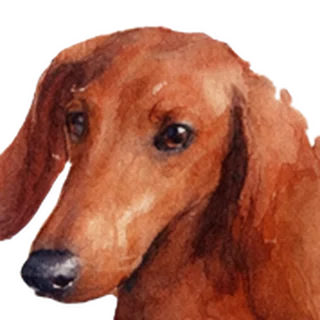
A Dachshund is a long, low hound bred in Germany to follow badgers underground. It's bold, clever and affectionate, often stubborn, with a surprisingly loud bark. It needs moderate daily exercise and a lean waistline to protect its long back, and given half a chance it will burrow under a blanket.
| Origin | Germany |
|---|---|
| Size | Standard 9–12 kg; miniature about 4.5–5 kg |
| Life expectancy | 12–16 years |
| Exercise | Up to an hour a day |
| Barking | Frequent, and loud |
| Temperament | Faithful, versatile, good tempered |
What is a Dachshund like?
Bold, clever and more stubborn than its size suggests. The Dogs Australia breed standard describes the Dachshund as “faithful, versatile and good tempered”, and as intelligent, lively and courageous.
The name is German for “badger dog”, and the AKC traces the breed’s German history back some 600 years. Dogs Australia says it was bred to hunt small game that goes to ground, mostly badger. In Germany, where it’s called the Teckel, the Royal Kennel Club says it’s still used to track wounded game and go to ground after badgers and rabbits.
Dachshunds come in two sizes, standard and miniature, and three coats: smooth, long and wire. The AKC calls them very intelligent but independent, and sensitive enough that harsh training backfires. Patience and rewards work better.
Why do Dachshunds burrow under blankets?
Because their ancestors worked underground. In its article on dogs who crawl under the covers, the AKC says earthdogs, the breeds that go into burrows, often like to sleep under the covers, and names the Dachshund among them.
The AKC offers a few reasons that stack up neatly for this breed. A dark, cosy spot under a blanket may feel like a natural den. Being covered can make a dog feel hidden and safe rather than out in the open. And it’s warm.
So a Dachshund that vanishes into the couch throw isn’t being odd. It’s doing what the breed was shaped for, minus the badger. That’s the habit the app’s Dachshund is built around.
How much exercise does a Dachshund need?
Moderate, and every day. The Royal Kennel Club puts it at up to an hour a day, and the AKC suggests two walks of moderate length.
It’s easy to under-do. The AKC says many owners assume a small dog gets enough exercise running around the house, but Dachshunds need regular walks to stay fit and to build the muscle that supports their long back.
That back is the breed’s known weak point. The Royal Kennel Club runs an IVDD (intervertebral disc disease) spine screening scheme for the breed, and the AKC’s advice is to keep Dachshunds lean and to stop them running up and down stairs or jumping on and off furniture.
Is a Dachshund a good dog to work beside?
Mostly, if you can live with the bark. The AKC rates the breed’s barking at the top of its scale and describes a “surprisingly loud, houndy bark”, a throwback to the days when it let a hunter above ground find the dog below. A courier at the door will not go unannounced.
Otherwise, a Dachshund is close company. The AKC says they’re very social and want to be with their humans, so expect one near your feet or under a blanket beside you. Put that blanket at floor level; it saves a jump.
One more quirk. The AKC notes a strong nose and prey drive, and says a Dachshund busy with something more interesting may not pay much attention to you. Sounds like a coworker.
The Dachshund in Doggydoro
The app’s Dachshund has this habit line: “Burrowed in and asleep by minute 3.” Only the French Bulldog and the greyhounds nod off sooner.
It’s one of the eight breeds free users can start with. Pro adds the Brindle Greyhound and the Bull Arab, and the others can be earned with bones. Meet them all with the other breeds.
Every dog is named by you, and the card at the end of a session says when yours dozed off: “25 minutes. Biscuit dozed off around minute 3.”
More of the dogs
- Greyhound: Asleep by minute 2. Flat out.
- Brindle Greyhound: Asleep by minute 2. Flat out.
- Bull Arab: Settles in after about four minutes.
- All ten breeds