
French Bulldog
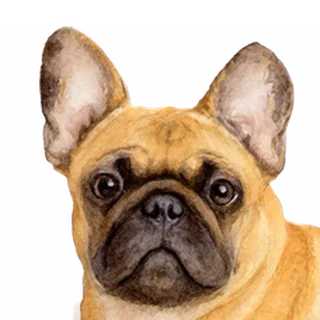
A French Bulldog is a small, sturdy companion with bat ears and a clownish streak. It's affectionate, adaptable and rarely barks, and it needs only modest exercise. It's also a flat-faced breed, so many Frenchies breathe noisily, snore, and cope poorly with heat and hard exercise.
| Origin | Toy Bulldogs from England, developed in France |
|---|---|
| Size | Small; ideal weight 11–12.5 kg |
| Life expectancy | 10–12 years |
| Exercise | Up to an hour a day |
| Barking | Infrequent |
| Temperament | Vivacious, deeply affectionate, intelligent |
What is a French Bulldog like?
A small, solid dog with a big personality and very little bark. The Dogs Australia breed standard asks for a dog that is “vivacious, deeply affectionate, intelligent”, full of courage yet with clown-like qualities.
The breed’s roots are English. In the mid-1800s, lace makers from Nottingham moved to northern France and took their toy Bulldogs with them. Over a few decades the little dogs gained their bat ears and a French name, and Paris made them fashionable. The Kennel Club in Britain recognised the breed in 1906.
The AKC calls Frenchies dogs of few words. They don’t bark much, but they’re alert enough to make good watchdogs, and they adapt happily to life with singles, couples or families.
How much exercise does a French Bulldog need?
Not much. The Royal Kennel Club puts it at up to an hour a day, and the AKC says a short walk or play session each day should keep a Frenchie in shape.
The catch is the weather. As a flat-faced breed, Frenchies tolerate heat, exercise and stress poorly, and the AKC says they should never be allowed to exert themselves in hot or humid weather. RSPCA Australia makes the same point about flat-faced dogs in warm, humid conditions. In an Australian summer, that walk belongs at the cooler ends of the day.
Weight matters too. The AKC notes Frenchies are prone to obesity, and the RSPCA Knowledgebase calls weight control extremely important for flat-faced dogs, because extra weight makes breathing harder. One more practical note: the AKC says their front-heavy build means Frenchies can’t swim, so keep an eye on them near pools.
Why do French Bulldogs snore?
Mostly because of the short face. The Royal Kennel Club explains that excess soft tissue in the nose and throat can obstruct a flat-faced dog’s airway, and some dogs also have narrow nostrils. The result can be heavy panting and noisy breathing.
The honest part: the snoring isn’t just a sweet noise. The RSPCA Knowledgebase says the snuffling, snoring and snorting of these breeds are signs that breathing is difficult for the dog, and lists the French Bulldog among the breeds commonly affected by BOAS (brachycephalic obstructive airway syndrome). Some flat-faced dogs can’t sleep normally. They wake often, or sleep sitting up to keep the airway open.
If you’re looking for a puppy, the Royal Kennel Club recommends breeders test their dogs under its Respiratory Function Grading scheme. It’s a fair thing to ask about.
Is a French Bulldog a good dog to work beside?
For a quiet home office, often yes. A Frenchie doesn’t need hours of exercise, rarely barks, and the AKC rates the breed at the top of its scale for affection with family and adaptability.
A working day might look like a short walk before the first meeting, then a lot of floor time near your chair. Expect some noise. If your Frenchie snores, your video calls may hear about it.
The things to plan around are heat and weight. Keep the room cool on hot days and go easy on desk snacks. And if your dog seems to overheat or get stressed easily, with noisy breathing, the AKC suggests asking your vet to look at its airway.
The French Bulldog in Doggydoro
The app’s French Bulldog has this habit line: “Asleep by minute 2. Snores.” That ties it with the Greyhound for the quickest nap in the kennel.
It’s one of the eight breeds free users can start with. Pro adds the Brindle Greyhound and the Bull Arab, and the others can be earned with bones. If you’d like a dog that holds out longer, the Labrador Retriever lasts until about minute 5. All of them are in the other breeds.
Every dog is named by you, and the card at the end of a session says when yours dozed off: “25 minutes. Biscuit dozed off around minute 2.”
More of the dogs
- Labrador Retriever: Dozes off around minute 5.
- German Shepherd: On watch for six minutes before giving in.
- Dachshund: Burrowed in and asleep by minute 3.
- All ten breeds